Application Deadline: December 11, 2026, at 23:59 GMT.
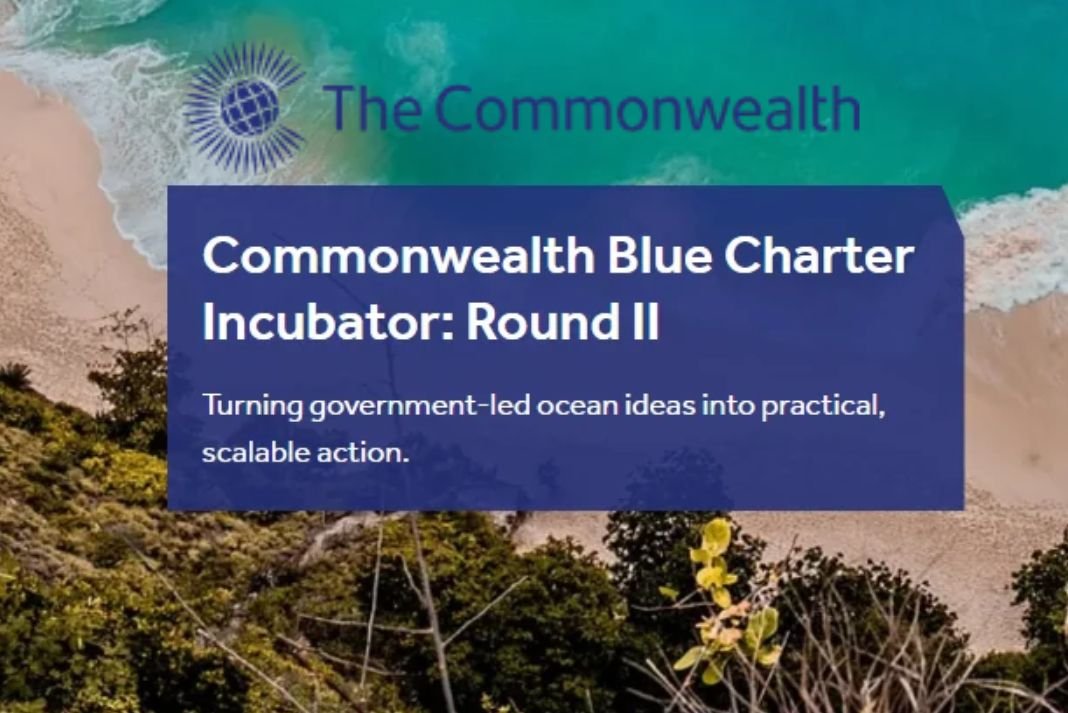
Applications are now open for the Commonwealth Blue Charter Incubator Round II, a grant funding opportunity supporting innovative, government-led projects that address major ocean challenges and promote sustainable blue economies across Commonwealth countries.
The programme provides grants ranging from £20,000 to £50,000 per project to help governments develop, test and implement practical solutions to ocean-related challenges. Projects can focus on marine pollution, ecosystem restoration, sustainable fisheries, blue economy development and climate-related ocean action.
The second round aims to support approximately 10 to 15 projects across eligible Commonwealth countries. Government institutions are expected to work with implementation partners such as NGOs, universities, research institutions, community organisations and private sector companies.
All 56 Commonwealth member countries are eligible to apply, including Tanzania, Kenya, Uganda, Nigeria, Ghana, South Africa and other Commonwealth nations.
The application deadline is December 11, 2026, at 23:59 GMT (UTC+0).
About the Commonwealth Blue Charter Incubator
The Commonwealth Blue Charter Incubator is an initiative established to help Commonwealth countries strengthen ocean protection and advance sustainable ocean development.
Launched at the Commonwealth Heads of Government Meeting in June 2022, the programme supports nationally owned initiatives that address pressing marine and coastal challenges.
Through catalytic grant funding, the Incubator helps governments and their partners develop practical projects, test innovative solutions, strengthen institutional capacity and generate evidence that can support future policies and investments.
The programme encourages collaboration between government institutions and organisations with the technical expertise, research capabilities and community connections needed to deliver meaningful results.
Round II is supported by the Commonwealth Secretariat, the Commonwealth Fund for Technical Cooperation, the Prince Albert II of Monaco Foundation and CAF – Development Bank of Latin America and the Caribbean.
Grant Benefits and Funding
Successful projects will receive financial and programme support to develop and implement ocean-related initiatives.
The main benefits include:
- Project grants: Funding ranging from £20,000 to £50,000 per selected project.
- Technical assistance: Support to strengthen project development and implementation.
- Capacity building: Opportunities to improve institutional and technical capabilities.
- Research and evidence generation: Support for activities that generate information to guide ocean-related policies and decisions.
- Government partnerships: Opportunities to strengthen collaboration between public institutions and non-governmental organisations.
- Innovation and pilot testing: Support to test practical solutions that can potentially be expanded or replicated.
- Future investment opportunities: Projects can generate evidence and establish a foundation for larger-scale initiatives.
The programme expects to select approximately 10 to 15 projects under Round II.
Important: This is institutional project funding, not an individual scholarship or personal grant. Funding is awarded to eligible government-led projects.
Who Can Apply?
The Commonwealth Blue Charter Incubator Round II is open to all 56 Commonwealth member countries.
However, the lead applicant must be a legally established national or sub-national government entity with formal government status.
Eligible lead applicants may include:
- Government ministries.
- Government departments.
- National government agencies.
- Local or sub-national government authorities.
- Other legally established public bodies with formal government status.
Organisations That Can Participate as Partners
Although NGOs and other organisations cannot lead applications independently, they are strongly encouraged to participate as project implementation partners.
Potential partners include:
- Non-governmental organisations (NGOs).
- Universities and higher education institutions.
- Academic and research institutions.
- Community-based organisations.
- Private sector companies.
- Technical and development organisations.
- Organisations working in marine conservation and environmental protection.
Partnerships are important because the programme encourages projects that combine government leadership with technical expertise and community participation.
Eligible Countries
All 56 Commonwealth member countries can submit applications through the common application and assessment process.
Eligible countries include:
Africa: Botswana, Cameroon, Eswatini, Gabon, The Gambia, Ghana, Kenya, Lesotho, Malawi, Mauritius, Mozambique, Namibia, Nigeria, Rwanda, Seychelles, Sierra Leone, South Africa, Tanzania, Togo, Uganda and Zambia, among others.
Asia: Bangladesh, Brunei Darussalam, India, Malaysia, Maldives, Pakistan, Singapore and Sri Lanka.
Caribbean and Americas: Antigua and Barbuda, The Bahamas, Barbados, Belize, Canada, Dominica, Grenada, Guyana, Jamaica, Saint Lucia, Saint Kitts and Nevis, Saint Vincent and the Grenadines, and Trinidad and Tobago.
Pacific: Australia, Fiji, Kiribati, Nauru, New Zealand, Papua New Guinea, Samoa, Solomon Islands, Tonga, Tuvalu and Vanuatu.
The complete list of eligible countries is available on the official Commonwealth website.
Each Commonwealth member country may submit a maximum of two project applications per funding round. Each government entity acting as a lead applicant may submit only one application.
Priority Areas for Funding
Projects must support the implementation of the Apia Commonwealth Ocean Declaration and address at least one of the programme’s five priority areas.
1. Reducing Marine Pollution
Projects should develop solutions to prevent and reduce pollution from land-based and sea-based sources.
Possible initiatives include:
- Reducing plastic pollution in oceans and coastal areas.
- Improving waste management in coastal communities.
- Preventing pollution from fishing and maritime activities.
- Developing practical approaches to marine waste collection and management.
2. Restoring Marine Ecosystems
This priority area supports the protection and restoration of marine and coastal ecosystems.
Potential projects may focus on:
- Mangrove restoration.
- Coral reef protection and rehabilitation.
- Seagrass conservation.
- Coastal habitat restoration.
- Community-led marine conservation initiatives.
3. Advancing a Sustainable Blue Economy
Projects should promote economic activities that protect ocean resources while supporting sustainable livelihoods and development.
Possible initiatives include:
- Sustainable coastal tourism.
- Ocean-based entrepreneurship.
- Sustainable marine resource utilisation.
- Climate-resilient coastal economic activities.
- Inclusive blue economy development.
4. Strengthening Sustainable Fisheries
This area supports improvements in fisheries management, governance and livelihoods.
Projects may address:
- Sustainable fishing practices.
- Fisheries monitoring and management.
- Improving fish value chains.
- Supporting fishing communities.
- Strengthening fisheries governance.
- Reducing pressure on marine resources.
5. Addressing the Ocean–Climate Nexus
Projects should address the relationship between ocean health and climate change.
Potential activities include:
- Coastal climate adaptation.
- Marine ecosystem resilience.
- Blue carbon initiatives.
- Climate change mitigation.
- Ocean-based climate solutions.
- Strengthening the resilience of coastal communities.
Projects may address one or more of these priority areas, depending on their objectives and national development priorities.
Project Duration and Implementation
Successful projects must have a duration of at least six months and no more than 18 months.
The programme supports country-led initiatives at different stages of development, including research, feasibility studies, pilot projects and implementation activities.
Projects should demonstrate how their proposed activities will contribute to practical ocean-related outcomes and support national priorities.
The selected projects are expected to be announced by the second quarter of 2027.
Funding Partnerships and Regional Opportunities
Round II has expanded its partnerships to increase support for ocean-related initiatives in different Commonwealth regions.
The programme includes dedicated funding support for:
- South Asia: Supported through the Prince Albert II of Monaco Foundation.
- Pacific Small Island Developing States (SIDS): Supported through the Prince Albert II of Monaco Foundation.
- The Commonwealth Caribbean: Supported through CAF – Development Bank of Latin America and the Caribbean.
Countries outside these dedicated funding regions are also eligible to apply and will be considered through the general Incubator funding process.
How to Apply for the Commonwealth Blue Charter Incubator Round II
Interested government institutions and their implementation partners should follow these steps:
- Visit the official Commonwealth Blue Charter Incubator Round II webpage.
- Download and carefully read the Application Guidelines and Assessment Criteria.
- Review the Frequently Asked Questions document.
- Download the Word version of the Grant Application Form.
- Work with relevant project partners to develop the proposal and prepare the required information.
- Ensure that the project addresses one or more of the five priority areas.
- Prepare the project budget, implementation plan and supporting information according to the official guidelines.
- Complete the official online Grant Application Form.
- Submit the application before the December 11, 2026 deadline.
Important: The Word version of the application form is provided to help applicants prepare their responses. Submitting the Word document alone does not count as an application. All proposals must be submitted through the official online application form.
Applicants should also ensure that their proposed projects have the necessary government leadership and appropriate implementation partnerships.
Application Deadline
The application deadline for the Commonwealth Blue Charter Incubator Round II is: Friday, December 11, 2026, at 23:59 GMT (UTC+0).
For applicants in Tanzania and other East African countries using East Africa Time (EAT), this is Saturday, December 12, 2026, at 2:59 AM EAT.
Government institutions and their partners are encouraged to begin preparing their proposals early to allow sufficient time for internal approvals and supporting documents.
Official Application Links
Interested government institutions and their partners can access the official programme information and application documents through the links below:
- Official Programme Announcement: https://thecommonwealth.org/commonwealth-blue-charter-incubator-round-2
- Online Grant Application Form: https://www.surveymonkey.com/r/BCIRoundII
- Application Guidelines and Assessment Criteria: Available on the official programme webpage.
- Frequently Asked Questions: Available on the official programme webpage.
- Programme Contact: bluecharter@commonwealth.int
Application Deadline: December 11, 2026, at 23:59 GMT.
Government institutions interested in ocean conservation, marine ecosystem restoration and sustainable blue economy development are encouraged to explore this funding opportunity and work with suitable implementation partners to prepare their proposals.
Frequently Asked Questions (FAQs)
What is the Commonwealth Blue Charter Incubator?
It is a grant funding programme established to support Commonwealth countries in developing and implementing projects that address ocean challenges and promote sustainable blue economies.
How much funding is available?
Selected projects can receive grants ranging from £20,000 to £50,000.
Can NGOs apply directly?
No. The lead applicant must be a legally established national or sub-national government entity. NGOs can participate as implementation partners.
Can universities and research institutions participate?
Yes. Universities and research institutions are encouraged to participate as technical, academic or implementation partners.
How many projects will be selected?
The programme expects to select approximately 10 to 15 projects in Round II.
What is the maximum project duration?
Projects must run for a minimum of six months and a maximum of 18 months.
What types of projects are supported?
Projects may address marine pollution, marine ecosystem restoration, sustainable blue economy development, sustainable fisheries and ocean-related climate challenges.
Can one country submit multiple applications?
Yes. Each Commonwealth member country can submit a maximum of two project applications per funding round. Each lead government entity can submit only one application.
When is the application deadline?
Applications close on December 11, 2026, at 23:59 GMT (UTC+0).

